

Scholarships for International Students from the Gulf
November 4, 2026
Study Cost in Malaysia: Fees and Living Costs
November 4, 2026
The best places to study abroad for students from Kuwait, Qatar and Oman are the United Kingdom, Malaysia, Australia, Germany, Ireland, Türkiye, France, Italy, South Korea and Japan. Each country suits a different priority, from English-taught degrees and post-study work rights to low tuition and fully funded government scholarships.
Most rankings of the best places to study abroad are written for American students on a one-semester exchange. A student from Kuwait City, Doha or Muscat is usually choosing a whole degree instead, and the questions change: will the ministry at home recognise it, can it be studied in English, and what will the full degree cost?
English-taught degrees and post-study work visas make the United Kingdom, Ireland and Australia the most familiar choices, while Malaysia offers English-taught study at a lower cost in a Muslim-majority country. Germany, France and Japan keep public university fees low or set them nationally, Türkiye funds international students through a government scholarship open to every nationality, and Italy and South Korea stand out for design, culture and technology. Whichever country makes the shortlist, a Gulf student should confirm that the home ministry recognises the university before applying.
10 Best Places to Study Abroad for Gulf Students

The 10 best places to study abroad for Gulf students are the United Kingdom, Malaysia, Australia, Germany, Ireland, Türkiye, France, Italy, South Korea and Japan, because each pairs internationally recognised universities with a clear strength. Those strengths range from English-taught degrees and post-study work visas to tuition-free public universities and fully funded government scholarships. The United Kingdom, Ireland and Australia teach in English, while the other seven offer English-taught programmes alongside degrees in the local language.
1. United Kingdom
The United Kingdom is one of the best places to study abroad for Gulf students who want an English-language degree from a globally recognised university such as Oxford, Cambridge, UCL or Imperial College London. UK universities are especially strong in research-led subjects such as law, business, medicine and engineering. After graduating, international students can stay on to work through the Graduate visa, which lasts 18 months for applications from January 2027, or three years after a PhD.
2. Malaysia
Malaysia is one of the best places to study abroad for Gulf students who want English-taught degrees at a lower cost in a Muslim-majority country, where halal food is the norm. Malaysia hosts about 167,000 international students, and Education Malaysia Global Services (EMGS), the government agency that processes student passes, received 95,522 new applications in 2025, 17% more than the year before. Several UK and Australian universities run branch campuses in Malaysia, where the degree is awarded by the parent university, alongside the country’s public and private universities in Malaysia.
3. Australia
Australia is one of the best places to study abroad for environmental science, marine biology and business, with highly ranked universities in Sydney, Melbourne and Brisbane and a coastal, outdoor lifestyle. Australia’s Temporary Graduate visa lets bachelor’s and coursework master’s graduates stay and work for up to two years, while research master’s and PhD graduates can stay for up to three years.
4. Germany
Germany is one of the best places to study abroad for engineering and the sciences on a budget, because most of its public universities charge no tuition fees, including to students from outside the EU. Student cities such as Berlin and Munich combine research universities with easy travel across central Europe. After graduating, international students can apply for a residence permit of up to 18 months to look for a job related to their degree, and may take any job while they search.
5. Ireland
Ireland is one of the best places to study abroad for computer science, pharmaceutical science and the humanities, in an English-speaking country with a large technology sector centred on Dublin. Ireland’s Third Level Graduate Programme gives international graduates 12 months of Stamp 1G permission after a level 8 honours bachelor’s degree, and up to 24 months after a level 9 master’s degree, granted in two 12-month blocks.
6. Türkiye
Türkiye is one of the best places to study abroad on a full scholarship, because the Türkiye Scholarships programme accepts applicants of every nationality except Turkish and combines funding with a university place. Türkiye Scholarships covers full tuition, accommodation and a stipend, plus health insurance and a return air ticket. Scholarship holders without C1-level Turkish take a one-year Turkish preparatory course first, including those placed on English-taught programmes.
7. France
France is one of the best places to study abroad for art, fashion, design and business, with public universities and specialist schools in Paris, Lyon and Toulouse. For the 2026 to 2027 academic year, most non-EU students at French public universities pay €2,902 a year for a bachelor’s degree and €3,950 a year for a master’s degree. French universities can exempt no more than 30% of their non-EU students from these fees in 2026 to 2027.
8. Italy
Italy is one of the best places to study abroad for art, architecture, design and the humanities, with historic universities in Bologna, Milan and Rome. The University of Bologna, founded in 1088, is considered the oldest university in the Western world. Italian cities also make the country a natural fit for students drawn to fashion, food culture and history.
9. South Korea
South Korea is one of the best places to study abroad for technology, business and media studies, with Seoul’s universities combining high-tech campuses with the country’s music, film and gaming industries. South Korea hosted 307,464 international students in 2026, passing the government’s target of 300,000 a year earlier than planned.
10. Japan
Japan is one of the best places to study abroad for robotics, engineering and biomedical research, with Tokyo and Kyoto as the main student cities. Japan’s national universities charge a standard annual tuition of ¥535,800, plus a one-off admission fee of ¥282,000.
How to Choose the Best Place to Study Abroad
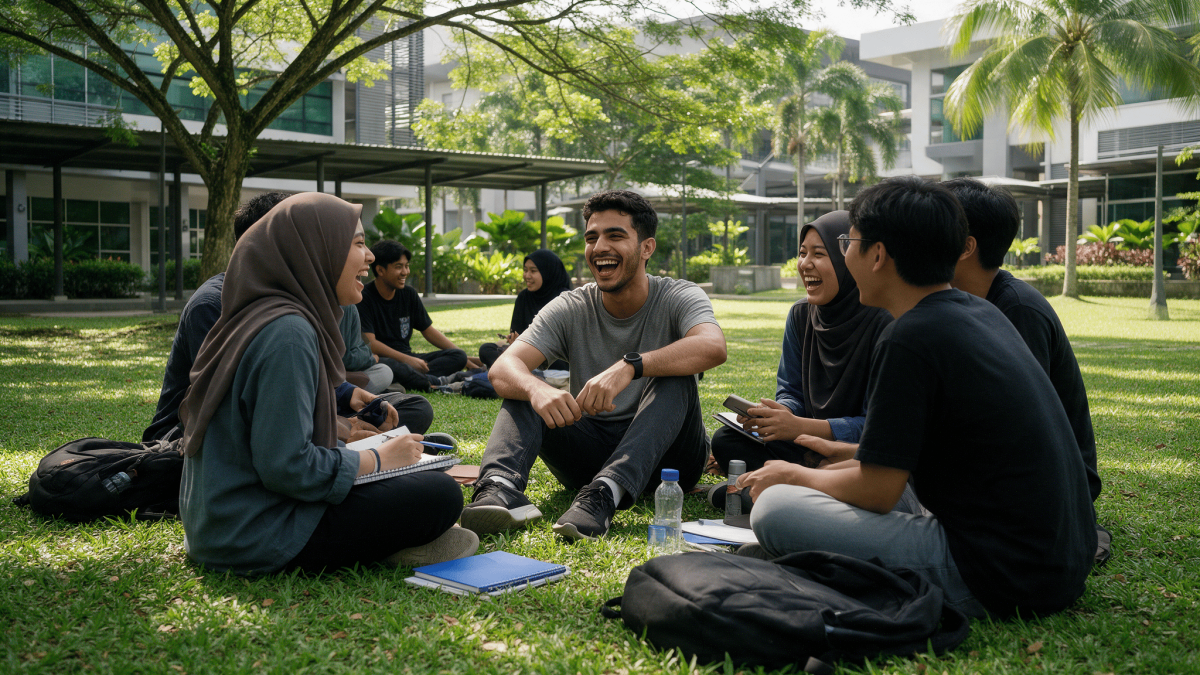
Choosing the best place to study abroad comes down to four checks: the field you want to study, the language of instruction, the total cost of the degree, and whether your home ministry recognises the university. Gulf ministries fund and recognise study only at approved institutions, and some build language study into the plan. Qatar’s Ministry of Education and Higher Education, for example, lets scholarship students study the host country’s language first in destinations such as Japan, South Korea, Spain and Germany.
Field of study narrows the list fastest. Engineering is strong in Germany, Japan and Malaysia, design in Italy and France, and students who want to stay on and work after graduating usually weigh the post-study visas of the United Kingdom, Ireland and Australia. Budget then decides between the finalists, and the full study cost in Malaysia, covering tuition, living costs and visa fees, makes a useful benchmark against tuition-free Germany or fixed-fee France.
How to Study Abroad in Malaysia from Kuwait, Qatar or Oman
Studying abroad in Malaysia from Kuwait, Qatar or Oman starts with an offer from a Malaysian university and a student pass application through EMGS, which has received applications from 189 countries over the past decade.
EMGA (Education Malaysia Global Assist) is a Malaysian education agency that places students from Kuwait, Qatar, Oman and the wider Gulf at more than 50 partner universities in Malaysia. EMGA’s counsellors in Kuwait, Qatar, Saudi Arabia and the UAE handle course matching, university applications and student pass support, and EMGA charges students nothing for the service.
To weigh Malaysia against the rest of your shortlist, talk to an EMGA counsellor.
Frequently Asked Questions
Which country is best for abroad study?
There is no single best country for studying abroad, because the right choice depends on a student’s field, budget, preferred language and the universities their home ministry recognises. For a Gulf student, a strong destination offers recognised universities, English-taught programmes and a total cost the family can plan for. Several countries meet that test, such as Malaysia, where complete student pass applications carry a 14-working-day processing charter and where EMGA guides Gulf students from course choice to arrival at more than 50 partner universities, free of charge.
Which country gives 100% scholarships?
Several countries give 100% scholarships to international students, and for Gulf students the most accessible are Türkiye, Malaysia and their own governments. Türkiye Scholarships is open to every nationality and funds undergraduate as well as postgraduate study, while Malaysia’s MTCP scholarship funds full-time master’s degrees for citizens of Kuwait, Qatar and Oman, who all appear on its list of eligible countries. Gulf governments also fully fund their own citizens abroad, and Qatar’s government scholarship plan expected 1,500 seats in 2024 to 2025, up from 700 the year before. Other fully funded scholarships for international students open to Gulf applicants include Fulbright and Erasmus Mundus.
Where is it cheapest to study abroad?
The cheapest places to study abroad are countries whose public universities charge little or no tuition, led by Germany and Malaysia. Germany’s public universities are tuition-free in most states, and even Baden-Württemberg, the main exception, charges non-EU students €1,500 per semester. Malaysia keeps tuition moderate as well: Universiti Malaya charges international students RM77,100 in total tuition for its Bachelor of Business Administration, roughly US$18,900 for the whole degree.
Sources
- GOV.UK – Graduate visa
- New Straits Times – 167,000 international students contribute RM20bil annually to Malaysia’s economy
- Education Malaysia Global Services – EMGS 2025 Annual Highlights
- Department of Home Affairs (Australia) – Temporary Graduate visa: Post-Higher Education Work stream
- DAAD – Costs of education and living
- Make it in Germany – Seeking employment after graduation
- Irish Immigration Service – Frequently asked questions for students
- Embassy of Türkiye in Accra – Türkiye Scholarships Undergraduate and Postgraduate Programmes
- Embassy of Türkiye in Canberra – Türkiye Scholarships Undergraduate Programme Applications
- Embassy of Türkiye in Riyadh – Türkiye Scholarships Undergraduate and Postgraduate Programmes Applications
- Service-Public.fr – University: some non-European foreign students will pay more from the start of the 2026 academic year
- University of Bologna – Università di Bologna
- Asia News Network – South Korea shifts international student policy from numbers to quality
- Study in Japan (JASSO) – Academic fees
- Qatar Tribune – Govt scholarship seats increase to 1,500 in new plan
- Malay Mail – China still tops list of international students in Malaysia, but other markets are growing, says EMGS
- Ministry of Foreign Affairs Malaysia – List of Countries Eligible to Apply for the MTCP Scholarship
- Universiti Malaya – Fee Structure, Bachelor Programme (International) 2025/2026
